How Microbes Break Down Shredded Paper: 7 Key Factors
By David Okoro • 2nd May

If you've ever wondered what actually happens to your shredded documents after the bin goes out (whether those strips are truly unrecoverable, or how long the "document reconstruction window" stays open), you're looking at a question that bridges security, compliance, and plain-old bin hygiene. Understanding paper microbiology and the mechanics of shredded paper biodegradation isn't just academic; it shapes how you handle disposal, how you store bins, and what timeline you can realistically trust for sensitive materials to become unreadable. Over the years managing shared equipment and disposal routines, I've seen that the teams who understood why decomposition happens, and what speeds it up or stalls it, made smarter bin-handling decisions. They didn't panic over where documents went, and their disposal workflows stayed predictable. For a science-backed look at how hard different shred types are to piece back together, see our shred reconstruction experiments.
Why Understanding Microbial Paper Decomposition Matters
Microorganisms (bacteria, fungi, and other microbes) are nature's recyclers. Once shredded paper lands in a bin, disposed to a landfill, or composted, these organisms begin breaking down cellulose and other compounds. The speed and completeness of that breakdown depends on seven interconnected factors. For privacy-conscious households and offices, the timeline of microbial paper decomposition determines confidence in compliance and the real security your disposal method delivers. For anyone managing office workflows, it also affects bin hygiene, odor control, and maintenance intervals (those small, repeatable habits that prevent headaches).
The 7 Key Factors in Paper Microbiology and Shredded Paper Degradation
1. Moisture and Humidity Levels
Microbes need moisture to metabolize. In dry conditions (a sealed bin in an air-conditioned office) decomposition slows dramatically or stalls. Conversely, bins stored outdoors in humid climates or exposed to rain create ideal microbial activity. A moisture content of 40 to 60% is the sweet spot for fungal and bacterial growth on paper.
Practical takeaway: If you're storing bins before collection, keep them in a dry, ventilated space. Damp bins accelerate decomposition but invite mold, odors, and pest attraction. This is where maintenance intervals matter: inspecting bins weekly in humid months prevents mess and unpleasant surprises at bin-change ergonomics time.
2. Temperature and Seasonal Variation
Warmer temperatures accelerate microbial metabolism. Decomposition rates roughly double for every 10°C rise, a principle called the Q₁₀ effect. In temperate climates, winter bins decompose slowly; summer bins break down faster. Tropical or subtropical settings see year-round rapid degradation. Industrial data confirms that paper in warm, moist landfills becomes unrecognizable within 2 to 5 months; in cooler conditions, the window stretches to 6 to 12 months.
Practical takeaway: If your concern is the document reconstruction window (how long before your shredded tax returns are truly dust), temperature matters. Summer disposal offers faster peace of mind; winter storage needs tighter security. For offices in cold climates, don't assume summer-speed decomposition if you're storing bins through winter.
3. Microbial Community Composition
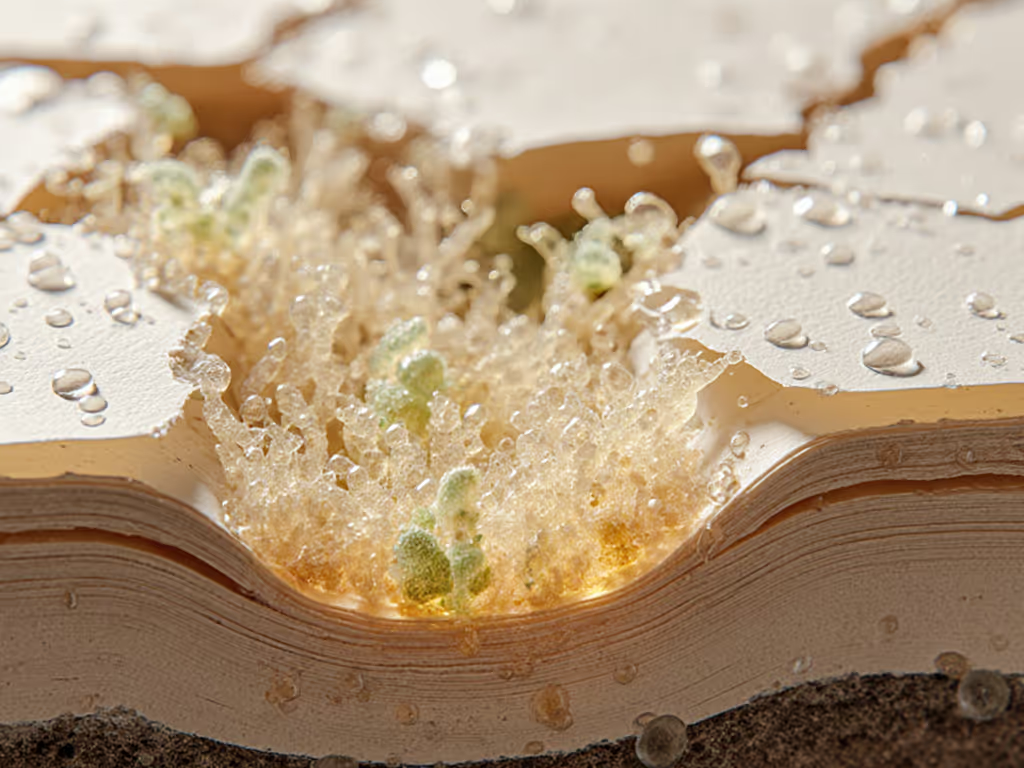
Not all microbes work equally. Bacteria like Cellulomonas and Bacillus species specialize in cellulose breakdown. Fungi (particularly white-rot fungi) are aggressive at degrading lignin and complex polymers in ink and coatings. The microbial community in a given bin depends on geography, prior decomposition events, and what materials are nearby. A bin in a mixed-waste landfill has different microbial neighbors than a bin in a clean office closet.
Practical takeaway: Commercial document destruction services and managed landfills maintain higher microbial diversity and decomposition speed than a home bin sitting in a garage. If you're concerned about security level biodegradation rates (i.e., how thoroughly your documents degrade), understand that an organized disposal route (curbside collection, shredding service, or composting facility) exposes paper to a richer microbial population than amateur storage.
4. Oxygen Availability and Anaerobic Conditions
Aerobic microbes (those that use oxygen) are faster degraders. Anaerobic conditions (a tightly sealed bin or paper deep in a landfill) slow the process but create different metabolic pathways. Anaerobic decomposition produces methane and hydrogen sulfide, which explains bin odor problems in poorly ventilated spaces. Shredded paper in a sealed bag degrades far more slowly than the same material in an open, ventilated container exposed to air. To understand the broader environmental consequences of anaerobic breakdown, read about the landfill impact of shredded paper.
Practical takeaway: Ventilated bins with mesh or perforated bags allow airflow, speed decomposition, reduce odor, and keep maintenance intervals realistic. If your bin setup smells stale or sour after a week, poor ventilation is the culprit, and a small habit (opening the bin or switching to a perforated bag) pays off in cleaner bin-change ergonomics and fewer pest issues.
5. Paper Composition and Ink Chemistry
Plain wood-pulp paper degrades quickly. But glossy mail, coated stock, synthetic inks, and security printing (common on bank statements and government documents) resist microbial attack because their binders and pigments are not easily digestible. High-security documents often use materials specifically designed to resist degradation. Newspaper breaks down in weeks; premium bond stock may take months longer. Thermal paper (receipts, labels) is particularly resistant.
Practical takeaway: Your shredding practice should account for material mix. Office junk mail with windows, credit card statements, and receipts all degrade slower than plain letter-stock. If you're mixing these in one bin, the security timeline is set by the slowest material, not the fastest. This is jam-risk grading logic applied to disposal: understand your material composition, and don't assume uniform degradation speed.
6. Shred Size and Surface Area
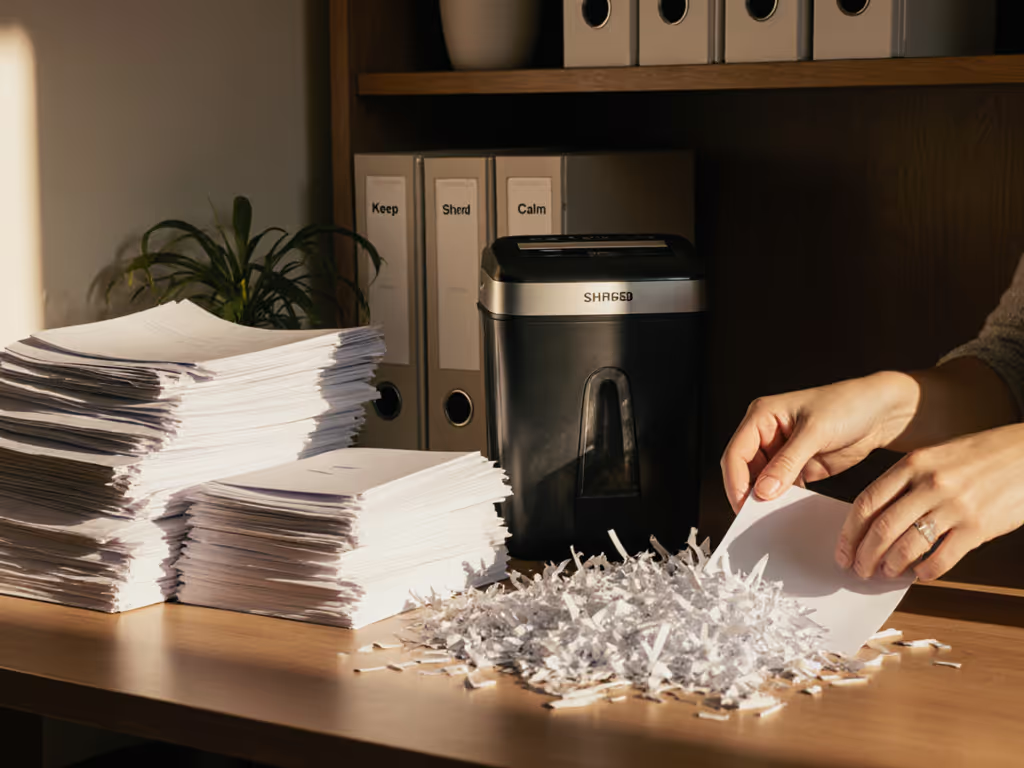
Smaller shreds degrade faster. A cross-cut shred (4×10 mm) has more exposed surface area than a strip cut (3×40 mm), so microbes attack it more quickly. Micro-cut shreds (2×2 mm or smaller) are consumed within weeks in warm, moist conditions. This is where security level biodegradation rates intersect with shredding technique. Fine shreds also discourage attempted reconstruction, a security feature that reinforces microbial attack.
Practical takeaway: If you're using a personal shredder, shred size affects both security speed and bin volume. Finer cuts pack the bin tighter, requiring more frequent emptying, but decompose faster and deter casual document recovery. Strip-cut produces larger volume and slower decomposition. This is a trade-off worth understanding, and it ties directly to your auto-feed behavior and bin-change intervals.
7. Carbon-to-Nitrogen Ratio and Nutrient Balance
Microbes need carbon (abundant in paper) and nitrogen (scarce in paper alone). A carbon-to-nitrogen ratio above 50:1 slows decomposition because microbes lack nitrogen to build proteins and enzymes. Mixed-waste environments (where nitrogen-rich materials such as food scraps and grass clippings are present) accelerate paper breakdown. Pure paper in isolation degrades more slowly.
Practical takeaway: If you're composting shredded paper at home, mix it with nitrogen-rich greens or a compost starter to accelerate decomposition. For step-by-step guidance on safe, effective compost ratios and particle sizes, see our secure shredded-paper composting guide. For office bins destined for landfill or municipal compost, the mixed-waste environment will support faster breakdown. Isolated bins, by contrast, sit stagnant longer. Low-fuss habits beat heroics when the bin hits full, a regular, predictable disposal routine beats hoarding bins and hoping they magically degrade.
Connecting Microbiology to Your Disposal Habits
Understanding these seven factors transforms shredding from an anxious, secretive act into a straightforward practice. You recognize that decomposition isn't instantaneous, but it is predictable if you understand your materials, storage conditions, and disposal route.
Maintenance intervals in minutes (a quick weekly check of bin ventilation, a note on your calendar for seasonal disposal patterns, a habit of not overstuffing bins) ensure that your shredded documents degrade predictably and without mess. I've trained teams who understood the science: they stored bins in ventilated spaces, didn't mix high-security and standard materials without planning, and emptied bins on schedule. Jams in the disposal workflow dropped, odor complaints disappeared, and nobody felt that creeping worry about where the documents actually went. Small habits, big reliability.
Your Next Step: Align Your Disposal Practice to Your Security and Climate
Take inventory of what you're shredding (material mix), where you're storing bins (temperature, humidity, ventilation), and your disposal method (curbside, service pickup, or composting). If recycling is your route, check recycling acceptance by shred size so particle dimensions don't derail facility intake. Cross-reference those conditions against the seven factors above (especially shred size, temperature, and bin ventilation). If you notice mismatches (e.g., you're storing bins in a damp garage over winter, but expecting summer-speed decomposition), adjust your routine. If you're using a personal shredder, test whether your shred output aligns with your disposal timeline. Set a maintenance interval in minutes (a monthly bin inspection) to catch ventilation or odor issues before they become headaches. A calm, clutter-reducing workflow makes paper disposal routine, not stressful. That's the payoff when you understand the science: you dispose with confidence, and your bin handles the rest.
Related Articles