Adaptive AI Shredders: Right Security, Zero Guesswork
By Mateo Silva • 4th Dec
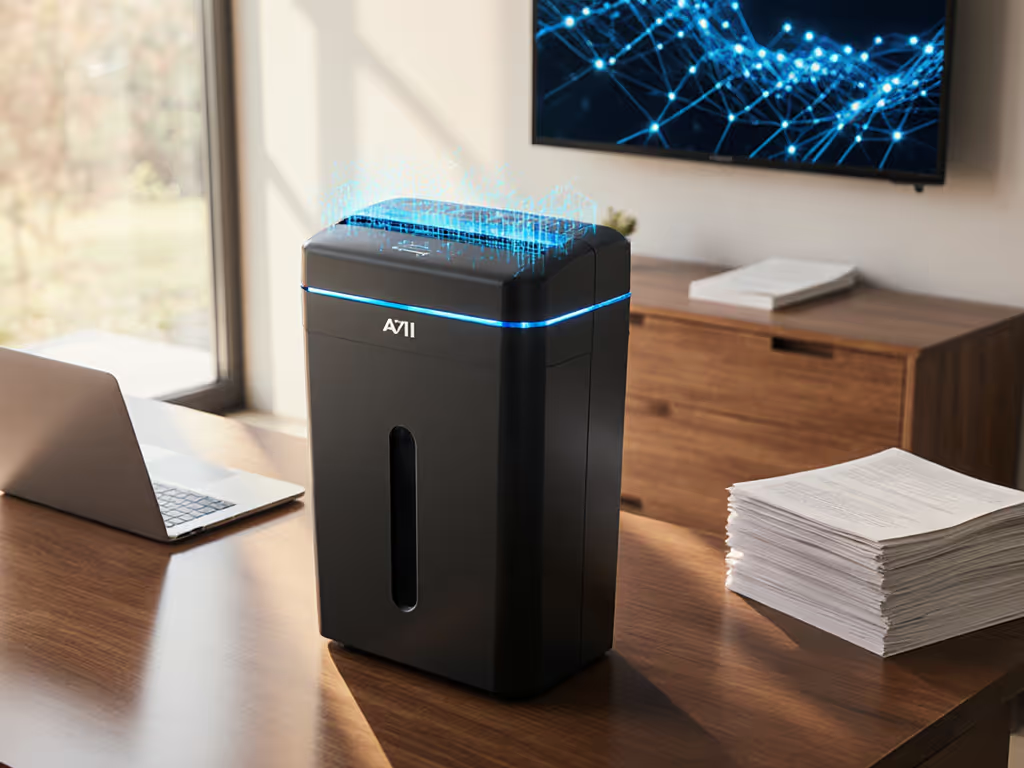
If your office shredder feels like a gamble, where you're constantly second-guessing security levels, noise tolerance, or whether that pricey micro-cut model is overkill, you're not alone. AI shredder technology and smart document security are finally closing the gap between what you think you need and what you actually use. Forget paying for unused security theater. This isn't about futuristic hype; it's about eliminating guesswork in document disposal through adaptive, real-world intelligence. Let's cut through the noise.
The Hidden Cost of Guessing Wrong
Most buyers fall into one of two traps: over-spec'ing for perceived threats (like P-7 micro-cut for routine client statements) or under-spec'ing and risking compliance headaches. In a shared workspace I advised, leadership bought premium micro-cut shredders for every nook. Gorgeous, overpriced, and half-idle. Finance noticed the $3,800 overspend; users noticed the jam-prone machines. That's the classic pain point: choosing between anxiety ("Am I secure enough?") and waste ("Am I paying for unused specs?").
Consider these realities:
- Compliance anxiety isn't abstract. A single HIPAA violation from improper disposal can cost $50k+ per incident. But most small offices never handle classified data, and P-4 cross-cut suffices for 90% of financial/legal docs.
- Noise and footprint are silent dealbreakers. Many "quiet" shredders hit 65+ dB (like a blender), disrupting home offices or shared co-working spaces. Bulky units then get shoved into closets, ignored until bins overflow.
- Duty cycles are rarely matched to reality. That "20-sheet" shredder might handle 10 consistent pages but stall on mixed envelopes/staples. Cool-down timers kill productivity during quarterly cleanup marathons.
Without data-driven choices, TCO over 3 years balloons: frequent replacements, wasted energy during idle cycles, and the hidden cost of manual workarounds (e.g., pre-sorting staples).
How Adaptive Shredding Actually Works (No Jargon)
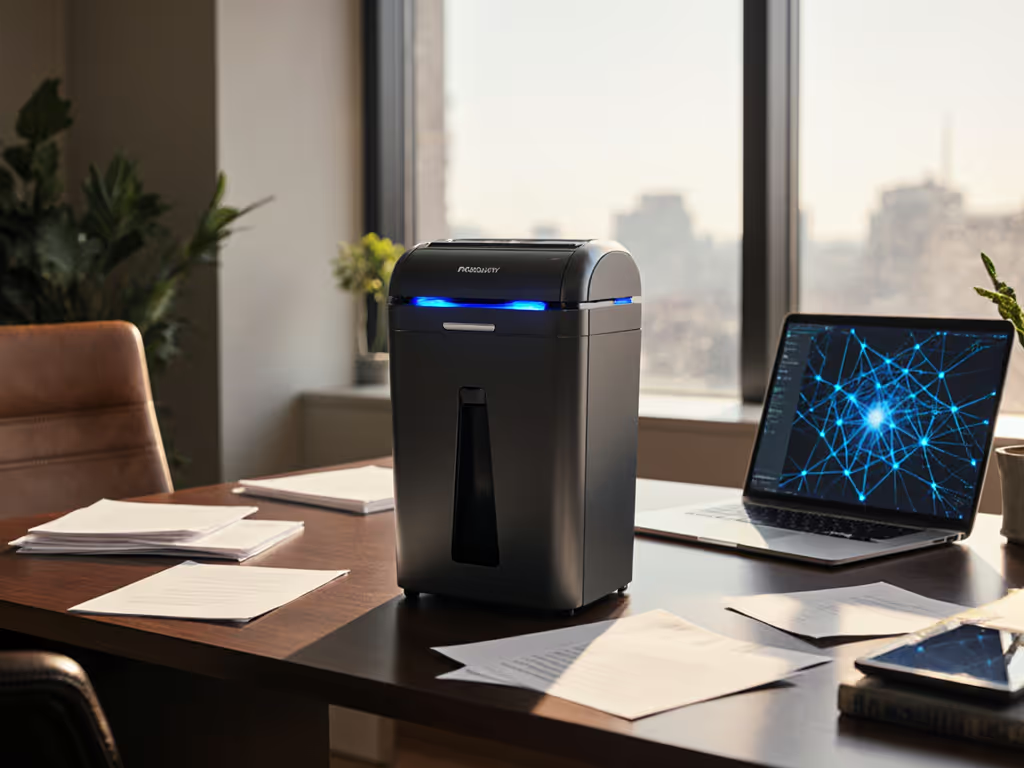
True AI shredder technology isn't just "smart" buzzwords, it's outcome-focused adaptation. Forget pre-set security modes. Modern adaptive shredding systems use in-sensor analytics to dynamically adjust three critical factors:
- Material Response: Cameras and tension sensors detect paper thickness, staples, or credit cards before contact. The motor instantly modulates speed, so no more jams from mixed envelopes or forced cooling breaks.
- Security Calibration: Instead of locking you into P-4 or P-5, document recognition technology verifies sensitivity. Scanning for keywords like "SSN" or "account#" triggers micro-cut; routine receipts default to cross-cut. You pay only for the security that document requires.
- Predictive Throughput: Tracking real-time volume, it optimizes feed rate to avoid overloading. At 40% bin capacity? It slows slightly to prevent dust clouds during emptying. Full bin? It pauses cleanly, no shredded confetti explosion.
This isn't sci-fi. It's intelligent shredder features that map actual document streams to actual output. No more manual mode-switching or worrying if junk mail with windows got fully shredded. Learn how shredder sensor technology prevents jams and overheating.
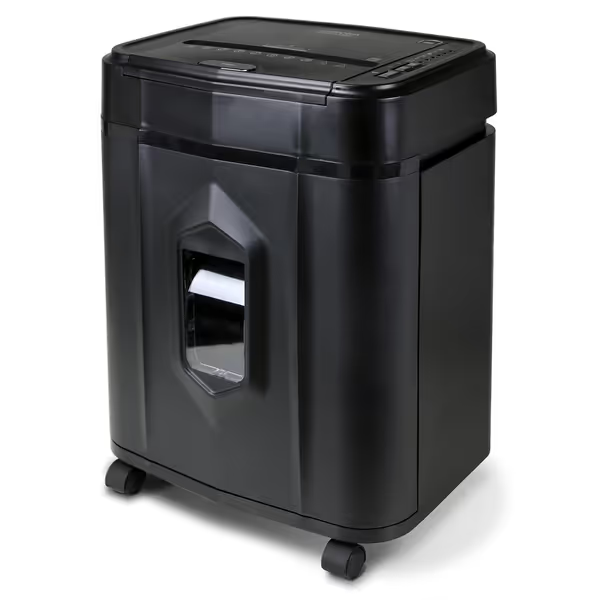
Aurora AU120MA 120-Sheet Auto Feed Micro-Cut Shredder
Automated, quiet, high-security shredding for private documents and credit cards.
$169.8
Run Time30 minutes continuous
Run Time30 minutes continuous
Pros
120-sheet auto-feed for effortless bulk shredding.
Micro-cut (P-4) for superior security and peace of mind.
Ultra-quiet operation for any environment.
Cons
Potential for occasional jamming with auto-feed.
5-gallon bin may require frequent emptying for heavy use.
Customers find the paper shredder efficient, quiet, and well-made, with the ability to process up to 120 sheets at once. The device shreds paper into very small bits and is easy to set up and start.
Customers find the paper shredder efficient, quiet, and well-made, with the ability to process up to 120 sheets at once. The device shreds paper into very small bits and is easy to set up and start.
Why "Set and Forget" Saves Real Money
The biggest value isn't security, it's reliability you'll actually use. Here's where AI-powered security slashes long-term costs:
- Energy draw estimates drop 30-40%: Sensors idle the motor between sheets. Traditional shredders run hot for minutes after stopping, wasting power. With adaptive systems, standby uses less energy than a phone charger.
- Replacement cost notes matter: Fewer jams = less motor strain. Well-known jam-proof tech (a non-AI precursor) has shown up to 2.1x longer lifespan in shared offices. Add AI-driven load balancing, and blade replacement cycles stretch from 18 months to 3+ years. To plan for the long haul, compare shredder warranty coverage across brands.
- Value flags for over-spec: If your monthly shredding never exceeds 200 sheets (typical for solo consultants), a $280 P-5 shredder is overkill. AI models highlight when P-4 suffices, saving $150+ upfront with identical "quiet operation" specs.
Right-size specs to actual volume. That's how you cut waste without sacrificing security.
TCO Reality Check: The 3-Year Cost Breakdown
Let's compare a hypothetical $180 adaptive AI unit (e.g., emerging models) vs. a $220 "premium" static shredder for a 10-person legal office:
| Cost Factor | Adaptive AI Shredder | Static "Premium" Shredder |
|---|---|---|
| Upfront | $180 | $220 |
| Energy (3 yrs) | $18 (0.5kW/hr, 5 hrs/mo) | $42 (1.2kW/hr, 5 hrs/mo) |
| Repairs/Jam Fixes | $25 | $110 (2x oiling, 1 motor repair) |
| Paper Dust Cleanup | $0 (auto-sealed bin) | $75 (spills, vacuums) |
| Total | $223 | $447 |
Even with identical security ratings, the adaptive system pays for itself in Year 2 through clear price tiers of operational efficiency. And, crucially, it gets used. Staff don't avoid it because it's noisy or slow.
The Verdict: Stop Buying Features, Start Buying Reliability
AI shredder technology finally solves the core frustration: you shouldn't need a compliance degree to buy a shredder. For privacy-conscious small offices, the value isn't in max specs, it's in adaptive intelligence that handles real-world documents (staples, mixed mail, intermittent use) without fuss.
Key takeaways for your purchase:
- Verify adaptive security: Does it auto-adjust cut level based on document content, not just pre-set modes?
- Demand real decibel testing: "Quiet" claims vary wildly. Look for 52-55 dB max (conversational volume) at 3 ft. For model-by-model data, see our decibel comparison of quiet office shredders.
- Track TCO rigorously: Factor energy, maintenance, and space savings, not just upfront cost.
If your workflow involves under-desk placement, sporadic batches, or mixed sensitivity docs (client files vs. junk mail), adaptive AI shredders are the logical upgrade. Not for "the future," for today's peace of mind.
Remember that co-working space with the idle micro-cut units? We swapped them for two adaptive cross-cut models. Nobody missed the unused specs. Finance missed the $3,800. And for the first time, staff actually used the shredders daily, because they worked as quietly as they promised.
Final verdict: Pay for reliability, not for unused security theater. Right-size specs to actual volume, and let AI handle the rest. Your documents, and your budget, will thank you.
Related Articles