
Shredder Lubrication Science: Oil Viscosity & Blade Life
By Linh Tran • 27th Feb
Why Does Oil Chemistry Matter More Than Most People Think?
Shredder lubrication science begins with a simple mechanical reality: metal blades meeting paper thousands of times per minute generate friction, and friction generates heat, wear, and noise. When you run an unlubricated shredder, the friction between the cutting blades creates microscopic metal shavings that accelerate blade dulling. The motor strains harder, temperatures climb, and the cutting action becomes erratic. In one clinic where I worked, a loud shredder wasn't loud because of its motor design; it was loud because the blades were fighting friction, vibrating against each other with each cut. When we swapped to a properly maintained unit with fresh blade oil chemistry, added an anti-vibration mat, and repositioned it three meters from the waiting area, decibel readings dropped measurably, and the machine no longer triggered complaints during after-hours filing sessions.
Proper lubrication does more than reduce noise; it's insurance against blade fatigue. For step-by-step fundamentals, see our shredder maintenance guide on oiling and cleaning to prevent jams. The science is straightforward: proper lubrication reduces blade fatigue, minimizing micro-fractures and maximizing longevity. Oil viscosity determines how well that protection reaches the cutting mechanism, how long it stays effective, and whether it attracts dust buildup, all factors that shape both immediate performance and long-term shred consistency.
What Does Oil Viscosity Actually Do Inside a Shredder?
Viscosity is thickness, meaning how fast oil flows at operating temperature. In shredders, the right viscosity balance is critical. Too thin, and the oil evaporates quickly or drains away, leaving blades unprotected. Too thick, and the oil doesn't penetrate blade edges and pivot points, gumming up the mechanism and creating drag that stalls throughput.
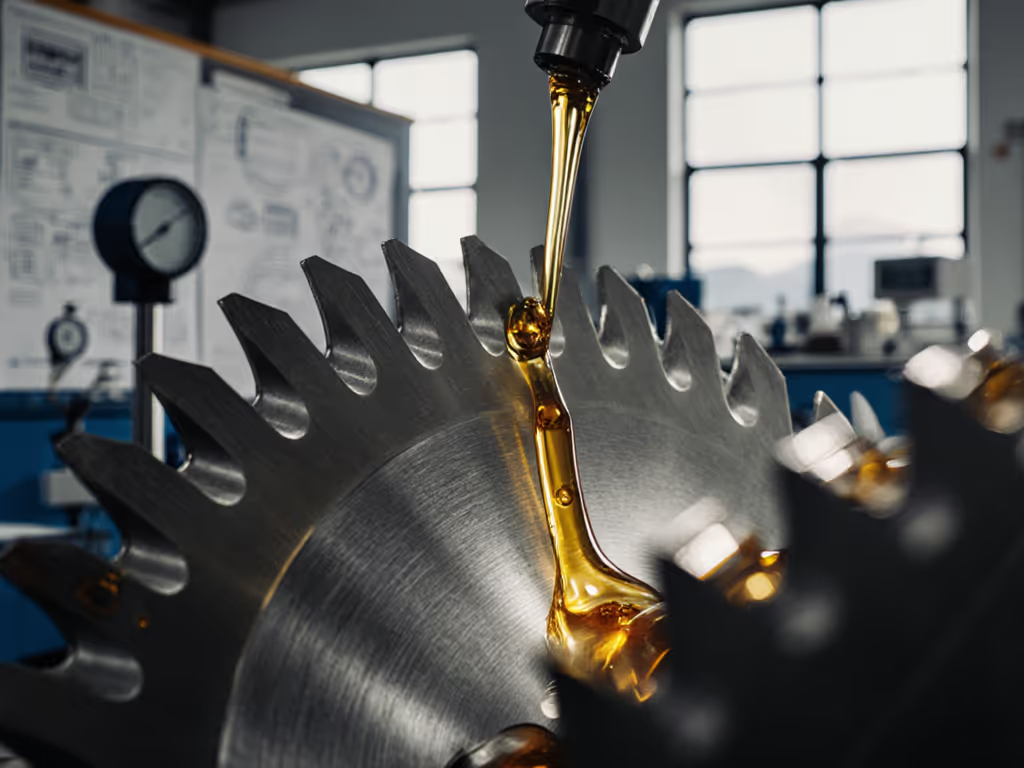
Manufacturers specify shredder-grade oils because they're formulated for controlled evaporation rates and oxidation resistance. These oils form a protective film that resists moisture and rust, not just on the blade surface but at the microscopic peaks and valleys where cutting actually happens. The film thickness (measured in microns) determines how long the protection lasts between maintenance intervals.
How Viscosity Connects to Blade Sharpness Over Time
When blade edges lose lubrication, they experience accelerated friction wear. Each pass through paper without oil protection creates miniature stress fractures in the hardened steel. Over weeks or months, these micro-fractures accumulate, and what was a razor edge becomes rough and dull. A dull blade:
- Pulls paper instead of slicing cleanly, increasing jam rates
- Demands more motor current to force through material, generating heat and noise
- Transfers vibration throughout the housing, which transfers to the desktop or surrounding area at measurable dB(A) levels
- Creates a grinding sound signature rather than a crisp cutting action
Correct oil viscosity, applied at proper intervals (typically every 1 to 2 months or after every 30 minutes of shredding), replaces that protective film before wear compounds.
What Is This "Smokeless" Oil Chemistry Everyone Mentions?
Smokeless shredder oil is formulated to lubricate without residue. Unlike traditional multipurpose oils that may leave oily deposits or require frequent reapplication, smokeless variants penetrate blade edges and pivot points with a lightweight, fast-absorbing base. The name "smokeless" refers to the absence of visible aerosol or vapor during use; older oils would sometimes smoke under friction heat, indicating volatile breakdown.
The chemistry works through high viscosity stability and a controlled evaporation rate, delivering smooth, consistent cuts without attracting dust or debris. This matters in shared workspaces or home offices where a silent, clean operation is part of the ideal. Lubrication particle effects also come into play: a properly formulated oil won't leave grit or residue that can jam the cutting mechanism or escape into a nearby room as visible dust.
Importantly, official shredder oils are designed for this specific balance. Generic oils, including cooking oils or multipurpose lubricants, do not adhere to blades as effectively, evaporate unpredictably, or can pose fire hazards (especially aerosol-based oils). Using the right product isn't marketing; it's chemistry.
How Does Lubrication Prevent Security Degradation?
Security degradation prevention is an underappreciated benefit of consistent blade maintenance. As blades wear and dull, shred consistency deteriorates. Cross-cut shredders depend on precise synchronization between horizontal and vertical cutters; dull blades misalign, creating larger particle sizes than the shredder's rated DIN level should produce. A DIN P-4 shredder that's under-lubricated and running with worn blades may no longer meet P-4 specifications defined by the DIN 66399 standard, and particles might exceed the stated size, reducing the security guarantee.
In regulated environments (healthcare, finance, legal offices), this matters. HIPAA, GLBA, and similar compliance frameworks expect shredders to perform within their rated specifications. Negligent maintenance could mean that sensitive data isn't destroyed to the promised standard, a gap that auditors and risk officers take seriously. Regular lubrication preserves the shredder's cutting geometry and ensures long-term shred consistency, so you can document compliance with confidence.
What's the Relationship Between Lubrication Frequency and Maintenance Burden?
Frequency recommendations vary by usage. Light users (occasional home office filing) might lubricate every 1 to 2 months. Regular business users (small office processing daily batches) typically lubricate after every 30 minutes of runtime or when the collection bin fills. High-volume environments follow manufacturer duty-cycle guidance or lubricate weekly. If duty cycle specs are confusing, see our shredder duty cycle guide for run time and cooldown best practices.
Two application methods dominate:
Lubricant sheets are pre-moistened sheets fed through the shredder like ordinary paper. As they pass through, they distribute lubricant across the blades without mess or contact with your hands. Simply feed one in, let the shredder process it, and you're done (no precision required). These are ideal for shared spaces or after-hours operation because they're quick and tidy.
Spray lubricants are applied directly to the cutting head. Hold the can 3-6 inches from the blades, spray evenly across the entire cutting mechanism, then run the shredder briefly without feeding paper to distribute the oil. Wipe away any excess that drips onto the exterior. Sprays offer finer control but require more care and cleanup.
The burden is minimal if you follow a calendar. Set a reminder on your phone (once a month or quarterly, depending on use), and spend two minutes on lubrication. Skip it, and within weeks the shredder will signal its unhappiness through increased noise, warmth, and jams.
Why Does Using the Wrong Oil Actually Matter?
Do not use aerosol oils, generic multipurpose lubricants, or cooking oils as substitutes. Here's why:
Aerosol oils use petroleum-based propellants, which pose a fire hazard inside an electrical appliance generating friction heat. The solvents evaporate, leaving behind residue that gums the mechanism. Cooking oils (canola, etc.) don't have the viscosity stability or oxidation inhibitors needed; they break down quickly under the heat and friction of active shredding, leaving sticky deposits that trap debris and accelerate wear. For evidence-backed guidance on common lubrication myths, see our maintenance myths debunked testing.
Manufacturers recommend official shredder lubricant because it adheres to the blades, reduces wear and tear, and maintains optimal performance. The chemistry is tailored: the viscosity stays stable through a day of cutting, the additives prevent rust and oxidation, and the molecular structure ensures the oil reaches deep into pivot joints and blade gaps where generic options won't penetrate. Quiet gear keeps teams considerate, focused, and welcome to concentrate, and lubrication is part of that quiet foundation.
How Should a Shared-Space User Approach Lubrication Timing?
In apartments, shared offices, or clinics where noise sensitivity runs high, timing is as important as the oil itself. After-hours lubrication is ideal. Run your lubrication sheet or spray application in the evening or early morning when others aren't present. This accomplishes two things:
- Any minor noise from the shredder running briefly (to distribute the oil) won't disturb coworkers or neighbors.
- The lubricant has time to settle into the blade gaps and cure before the next high-volume shredding session.
If you process large batches, lubricate before the batch, not during a jam crisis at 3 p.m. when the shredder is overheated and your coworkers are annoyed. Preventive lubrication eliminates the panic. Quiet is a productivity feature, and consistency is how you achieve it.
What Signs Tell You a Shredder Needs Lubrication?
Listen and feel for these signals:
- Rising pitch or grinding noise: Friction increasing; blades slowing down or fighting paper.
- Heat radiating from the housing: Friction generating thermal energy; protective film depleted.
- Paper jams that weren't happening before: Dull blades pulling instead of cutting; motor stalling under load.
- Visible slowdown in cutting speed: Motor working harder against increased friction.
- Vibration transfer to the desk or surrounding surface: Blade imbalance and friction creating resonance.
If you spot these, lubricate immediately. Then establish a preventive schedule so you never reach that point. For customized intervals by workload, use our usage-based maintenance schedule. In one facility where I tracked shredder maintenance, units running on a fixed monthly lubrication schedule had zero jam complaints and measurably lower noise profiles (tested at 1m and 3m from the cutting head) compared to reactive, crisis-driven lubrication.
The Bottom Line: Lubrication Is Security, Durability, and Quiet
Shredder lubrication science isn't exotic; it is applied physics and chemistry working together to preserve blade geometry, reduce friction, and extend machine life. Oil viscosity, controlled evaporation, oxidation resistance, and particle adherence all combine to keep your shredder cutting cleanly, quietly, and consistently. Use the right lubricant at regular intervals, and you'll avoid expensive repairs, jam frustration, and the noise that erodes workplace peace.
The choice is yours: spend two minutes a month on preventive lubrication and enjoy reliable, quiet operation, or ignore it and deal with slowdowns, heat, noise, and eventual blade replacement. In spaces where quiet matters (shared offices, home studios, late-night filing), the answer is clear. Document security, blade life, and acoustic comfort all flow from the same source: consistent, science-backed lubrication practice.
Related Articles