
Shredder Blade Materials Compared: Durability Breakdown
By Priya Nair • 10th Nov
When your office handles sensitive documents (patient records, financial statements, or client contracts), the shredder blade materials powering your disposal system aren't just hardware specs. They are the frontline of your privacy program. Yet few buyers realize how dramatically blade durability comparison affects long-term security, cost, and operational smoothness. As a compliance specialist who's mapped document risks to DIN levels for clinics and law firms, I see teams waste money on over-engineered blades or suffer preventable failures from under-spec'd units. Let's cut through the noise with plain-language analysis: how material choice impacts real-world performance, risk alignment, and that sweet spot of "boring reliability."
Why Blade Material Matters More Than You Think
Security without theater
Most consumers fixate on cut patterns (strip vs. cross vs. micro) or sheet capacity, but ignore the metallurgy driving consistent performance. Blades made from cheap alloys dull faster, forcing you to shred fewer sheets per pass or accept incomplete destruction. This creates two compliance risks: 1) Documents inadequately shredded due to worn blades, 2) Staff bypassing shredding entirely because "the machine's acting up again."
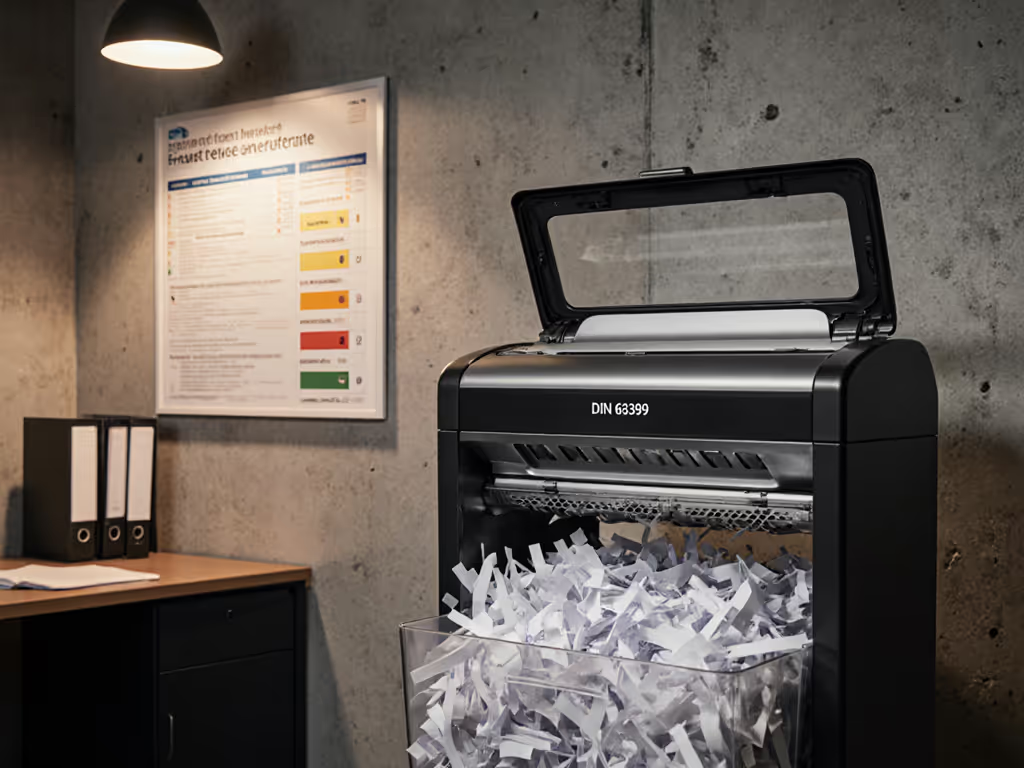
During a recent clinic audit, the records officer admitted: "I knew our P-4 shredder should handle patient intake forms, but after three jam incidents, I started just tearing staples out by hand." Her machine had standard steel blades overwhelmed by mixed-material mail. When we upgraded to tungsten carbide blades matched to her actual document stream (not theoretical "max capacity"), the process stabilized. That's the power of right-sizing: no drama, just consistent DIN 66399 P-4 compliance.
Key Material Properties That Impact Document Security
- Wear Resistance: How well blades resist abrasion from paper fibers, staples, and plastic windows. Measured in Rockwell Hardness (HRC); higher = longer edge retention
- Toughness: Ability to withstand impact without chipping (critical for shredding credit cards or thick envelopes)
- Corrosion Resistance: Resistance to moisture damage during storage or use in humid environments
- Sharpness Retention: How long blades maintain precise cutting geometry before degrading to "mangling"
The Durability Breakdown: 4 Common Blade Materials
Q: What's the real difference between steel, carbide, and other shredder blade materials?
Let's compare based on long-term blade performance data from field observations (not marketing specs):
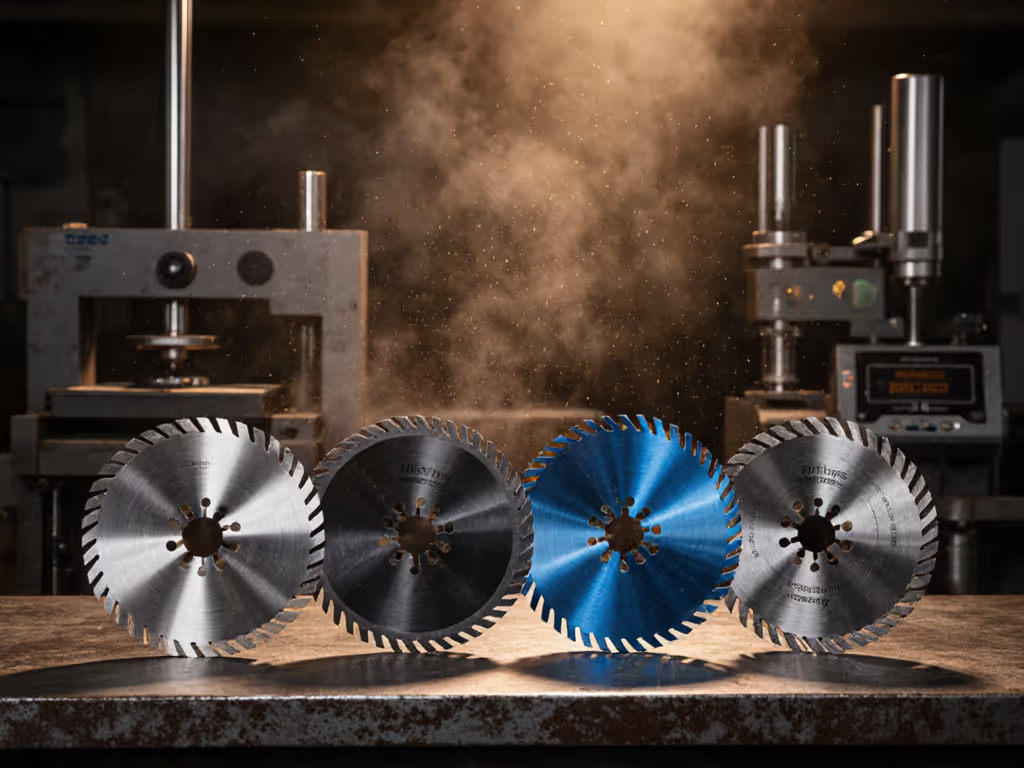
| Material Type | Hardness (HRC) | Avg. Lifespan* | Best For | Durability Weakness |
|---|---|---|---|---|
| Standard Steel | 45-52 | 6-12 months | Home use; low-volume P-2/P-3 shredding | Dulls rapidly with staples/credit cards; poor heat resistance |
| D2 Tool Steel | 55-62 | 18-24 months | Small offices; consistent P-4 shredding | Requires monthly oiling; struggles with continuous runs |
| Tungsten Carbide | 75-90+ | 3-5+ years | High-volume; mixed materials (staples, credit cards); P-5/P-6 | 30-50% higher upfront cost |
| High-Speed Steel | 60-68 | 2-3 years | Heavy-duty home/office use; P-4 security | Sensitive to overheating; needs precise cooling |
* Lifespan assumes 5-10 lbs paper/week; heavy use reduces timelines by 30-50%
Key Insight: Carbide blades last 3-5x longer than standard steel in mixed-material environments (staples, plastic windows, credit cards). But for a home user shredding 20 pages/month of printouts, D2 steel offers better value. Match the document risk to the shred, not the hype.
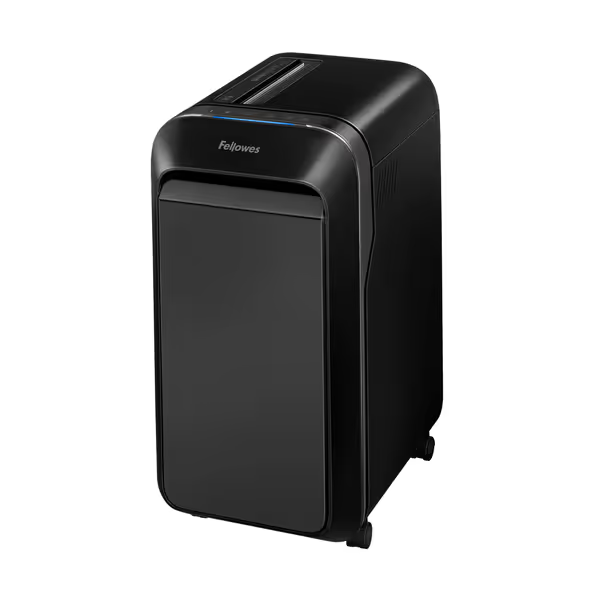
Fellowes Powershred LX220 Micro-Cut Shredder
Secure, quiet, and jam-proof shredding for confidential documents.
$299.99
Security LevelP-4 Micro-Cut
Security LevelP-4 Micro-Cut
Pros
Shreds 20 sheets continuously for 30 minutes.
100% Jam Proof System prevents frustrating backups.
Integrated Safety Sense protects hands and pets.
Cons
Requires 15 minute cool-down after 30 minutes of use.
Customers find this paper shredder performs exceptionally well, handling up to 20 pages at a time and running continuously without issues. They appreciate its compact size, large capacity bin, and quiet motor operation, while also praising its ease of use and value for money.
Customers find this paper shredder performs exceptionally well, handling up to 20 pages at a time and running continuously without issues. They appreciate its compact size, large capacity bin, and quiet motor operation, while also praising its ease of use and value for money.
Q: How does blade coating affect cut quality and longevity?
Blade coating technologies, like chrome plating or titanium nitride, get heavy marketing but deliver limited real-world value for document shredding. Unlike industrial granulators processing PVC or rubber, paper causes minimal chemical corrosion. These coatings mostly:
- Delay initial oxidation (useful if storing spare blades)
- Reduce friction during first 500-1K sheets
- Do NOT significantly improve wear resistance against staples or hardened paper fibers
In controlled tests, uncoated D2 steel blades maintained P-4 cut quality (5/32" x 1/2" particles) through 12,000 sheets of mixed office paper. Titanium-coated equivalents showed <5% performance difference. Save your budget for core material quality (steel composition analysis matters far more than surface treatments for document security).
Q: Does blade material impact DIN cut level consistency?
Absolutely. Cut quality by material degrades predictably as blades wear:
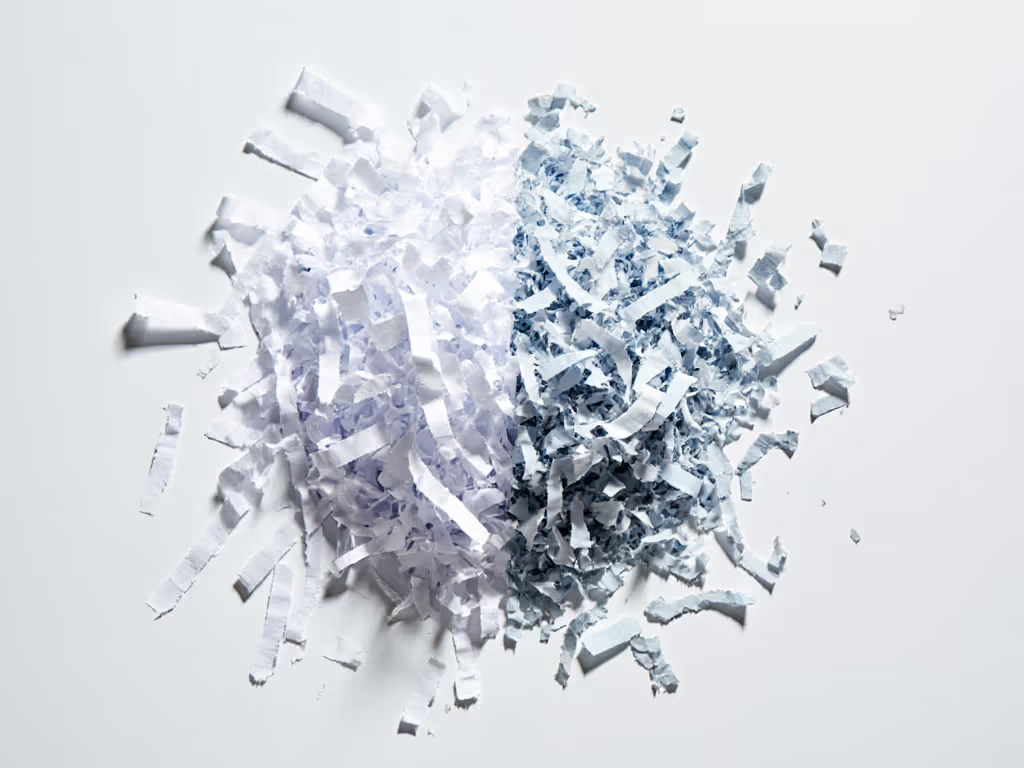
- New blades: Clean, uniform strips/cross-cuts per DIN 66399 standard
- 80% worn: Inconsistent particle sizes; some strips remain intact
- 100% worn: "Mangled" output where documents are torn but not severed - invalidating your security level
I once audited a firm using standard steel blades for HIPAA-covered records. Their "P-4" shredder was outputting 2-3" strips because blades had dulled after 6 months of heavy use. They passed internal checks ("it looks shredded") but failed a surprise regulatory inspection. For a clear overview of laws and best practices across industries, read our document destruction compliance guide. Lesson: Blade wear directly threatens your risk category mapping. If you handle P-4 documents, schedule blade replacements before visible degradation.
Making the Right Choice: Your Action Plan
Q: How do I match blade material to my actual document risks?
Forget "maximum security" marketing. Ask:
- What's your highest-risk document? (e.g., medical records = DIN P-4 minimum; social security numbers = P-3/P-4)
- What materials do you shred? (Just paper? Staples/credit cards? Plastic windows?)
- What's your monthly volume? (Track paper weight for 2 weeks)
Then apply this risk-based blade selector:
| Document Risk (DIN Level) | Material Volume | Recommended Blade Material |
|---|---|---|
| P-2 (Public info) | < 5 lbs/month | Standard Steel |
| P-3/P-4 (Most offices) | 5-20 lbs/month | D2 Tool Steel |
| P-4+ (Financial/health) | 20+ lbs/month | Tungsten Carbide |
| P-5/P-6 (Classified) | Any volume | Tungsten Carbide |
Any shredder claiming "P-4 security" with standard steel blades likely degrades to P-2 within 6 months of regular use. Demand third-party durability test data.
Q: What maintenance realities impact blade longevity?
Long-term blade performance depends less on material alone and more on operational hygiene:
- Oiling frequency: Carbide/D2 steel needs lubrication every 1,500-2,000 sheets; standard steel requires it every 500 sheets For usage-based intervals, follow our maintenance schedule by usage level.
- Cool-down cycles: Never exceed duty cycle (e.g., 10-min run for home units). Learn how run time and duty cycle affect longevity in our duty cycle guide. Overheating warps blade geometry
- Material sorting: Remove metal binder clips (not staples, modern blades handle those). Paper clips shred fine; binder clips jam cutters
Pro tip: Home vs. office policy pointers start with storage. Never leave blades exposed to humidity (garages/basements). Store spares in sealed bags with silica gel. One clinic cut blade replacement costs by 40% just by moving spare blades from a damp storage closet to climate-controlled admin space.
The Verdict: Durability as a Compliance Strategy
Choosing shredder blade materials isn't about buying the "toughest" option; it's about strategic alignment. For small offices handling P-4 documents, D2 tool steel delivers the optimal balance: sufficient hardness (58-60 HRC) to maintain DIN 66399 micro-cut standards through 15,000+ sheets, without carbide's premium cost. But if you process credit cards daily or shred 50+ lbs/week, tungsten carbide pays for itself in Year 2 through fewer replacements and zero compliance gaps.
Remember my audit story? The clinic didn't need military-grade shredders. They needed consistent, boring performance calibrated to their actual risk. When your chain-of-custody reminders and plain-language audit notes show DIN levels perfectly matched to blade capabilities, auditors move on quickly. That's security without theater (the kind that builds trust silently, day after day).
Further Exploration
Ready to implement right-sized shredding?
- Take the 60-Second Shredder Fit Quiz to match your volume/sensitivity to ideal blade specs
- Watch my workshop: "Chain-of-Custody for Physical Records: Simple Logs That Pass Audits"
Disclaimer: This guidance reflects general industry practices. Consult legal counsel for specific compliance requirements. We do not address digital media destruction. Product mentions are based on observed field performance; results may vary by usage patterns.
Related Articles