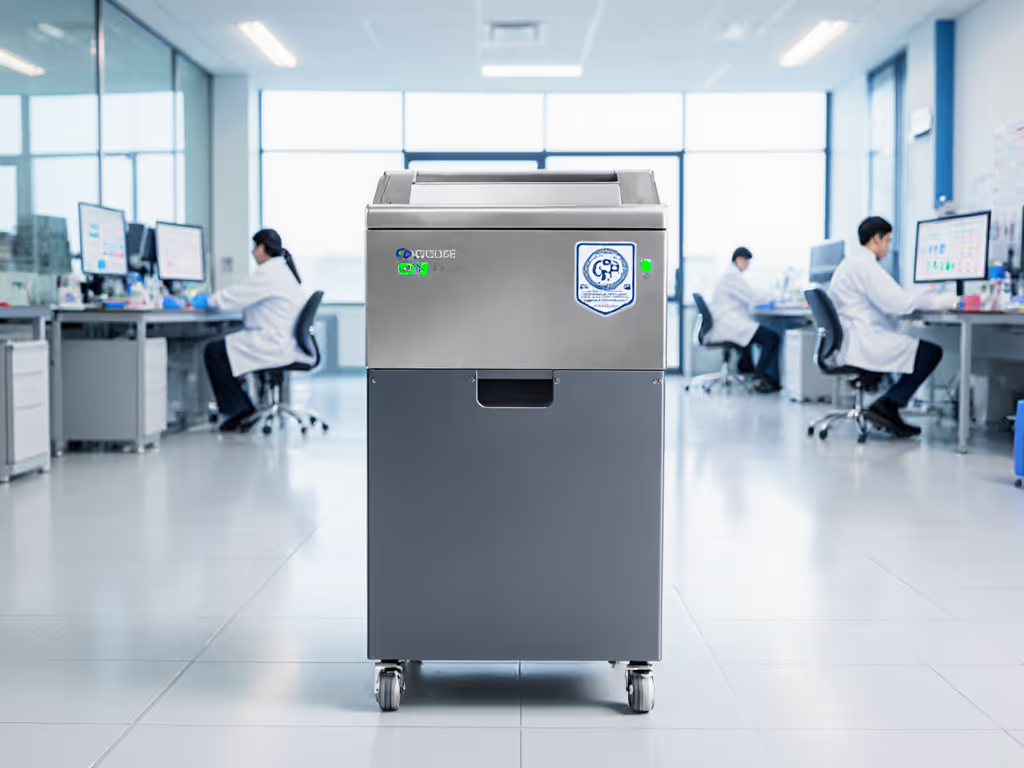

Secure IoT Shredders: Close Network Vulnerabilities
By Linh Tran • 22nd Nov

When your shredder IoT security fails, physical document destruction becomes theater. Connected shredders with weak connected shredder vulnerabilities turn confidential paper into digital breadcrumbs, especially when poor network hygiene lets hackers exploit what should be your last line of defense. As cyberattacks increasingly target Internet of Things (IoT) devices like printers, cameras, and yes, smart shredders, understanding how these vulnerabilities enable data leakage prevention failures is no longer optional. Quiet operation isn't just about office comfort; it is about ensuring devices stay in use securely. Let's dissect how shredder network security gaps happen and how to close them, without compromising the peace your workspace needs.
Why Would Hackers Target a Shredder?
IoT devices aren't just cameras and thermostats, they include any internet-connected appliance, from smart refrigerators to connected shredders. Search results reveal how attackers exploit three critical weaknesses in consumer IoT:
- Hardcoded or default credentials (like those found in 2016's Mirai botnet) let hackers hijack devices for DDoS attacks.
- Unencrypted data transmission exposes metadata about when and what you shred, patterns that reveal business cycles or sensitive client activity.
- Insecure update mechanisms allow malware injection during firmware patches, as seen in attacks targeting industrial systems like Stuxnet.
A compromised shredder might seem harmless, but it is a network beachhead. Once inside, attackers pivot to more valuable assets, like your document management system or client databases. For automated audit trails and safer workflows, see our DMS integration guide. As one cybersecurity report notes, "lateral movement" from vulnerable IoT endpoints causes 70% of network breaches in small offices. Your shredder becomes the unlocked back door.
How Do Connected Shredders Leak Data?
Unlike traditional models, IoT shredders collect data: run times, paper volume, jam frequency, and even user identification for audit trails. Learn how connected models enable IoT-powered compliance through usage tracking and security logging. When IoT device protection fails, this data spills into the wrong hands:
Real incident pattern: A 2024 study tracked a botnet that recruited 5,000+ office IoT devices, including shredders, with weak authentication. The malware harvested metadata to map office activity cycles, then timed ransomware attacks during peak shredding hours when stress levels were highest.
Shredders with cloud connectivity create two leak vectors:
- Metadata exposure: Shredding schedules reveal when confidential documents are processed (e.g., "All financial records shredded Fridays at 2 PM")
- Network reconnaissance: Poorly segmented devices let attackers scan your entire network from the shredder's IP address
This is where physical security and cybersecurity collide. A loud shredder relocated to a hallway due to noise complaints might sit on a less secure visitor network (making it easier to compromise). Quiet gear keeps teams considerate, focused, and able to concentrate, and crucially, keeps security protocols intact.
What Security Features Actually Matter?
Not all "smart" shredders are equally risky. Prioritize these features when evaluating shredder IoT security:
- Zero-trust authentication: Requires unique credentials per device (no default admin/password combos)
- End-to-end encryption: For all data transmissions (not just HTTPS web interfaces)
- Air-gapped firmware updates: Where updates require physical USB upload, preventing remote injection
- Network segmentation: Built-in VLAN support to isolate the shredder from primary business networks
Avoid models that store user data in the cloud without clear GDPR/HIPAA compliance statements. If you handle regulated data, review our document destruction compliance guide for HIPAA, FACTA, and GDPR essentials. Remember: IoT device protection isn't just about keeping hackers out, it is about containing damage if they get in.
How Noise Levels Impact Security Compliance
This is where my clinic experience resonates. When a loud shredder causes winces at 3 meters, staff move it somewhere less secure (like a closet shared with guest Wi-Fi routers). Placement diagrams in words help visualize this:
Scenario A: Considerate placement
- Shredder at desk rear corner (1.2m from nearest coworker)
- dB(A) at 1m and 3m: 52 dB / 41 dB (quieter than a library whisper)
- Vibration/desk transfer notes: Rubber feet prevent desk resonance
- After-hours suitability: Safe to run during video calls
Scenario B: Reactive placement
- Shredder in hallway near insecure router (0.5m from network equipment)
- dB(A) at 1m and 3m: 68 dB / 59 dB (disruptive to focused work)
- Vibration/desk transfer notes: Mounted directly on hollow shelf (amplifies noise)
- After-hours suitability: Causes noise complaints after 6 PM
The louder model gets relocated to a physically accessible spot with weaker network controls. Staff disable its "disturbing" notifications, including security alerts. Footprint-to-room mapping isn't just ergonomic, it is a security layer. For layout best practices that preserve security zones, follow our shredder placement guide. Respect the room; respect the peace that keeps protocols followed.
Your 4-Step Secure Shredder Checklist
Don't let convenience override security. Before deploying any connected shredder:
- Test network isolation
- Place it on a guest VLAN (never your primary business network)
- Verify it can't ping internal servers (use
nmapor network scanner apps)
- Demand physical security specs
- Look for TEMPEST-shielded components if handling classified data
- Confirm anti-tamper switches that wipe credentials if opened
- Validate noise compliance
- Require dB(A) at 1m and 3m measurements in specs (below 55 dB at 1m is ideal)
- Check if vibration dampening is included, since excessive vibration can expose weak firmware ports
- Audit update transparency
- Does the manufacturer publish CVE reports?
- Are firmware updates digitally signed?
For home shredders or small offices, consider air-gapped models without cloud connectivity. Sometimes offline is the most secure network.
The Quiet Connection Between Noise and Vigilance
In that clinic waiting room years ago, swapping to a damped shredder didn't just silence complaints, it kept the device where security policies required it. When noise stays within 45 dB(A) at 3m, staff won't relocate it to risky spots. When vibration transfer is minimized, they won't disable "annoying" sensors that could flag breaches. Quietness isn't a luxury; it is data leakage prevention through behavioral design.
As IoT threats evolve, your document destruction tool must be both physically and digitally secure. The right model respects your space acoustically and your network integrity, proving that true security is measured in both decibels and data points.

Further Exploration: Examine how your office's network segmentation policy handles IoT devices. Could a single compromised shredder access customer records? Consult NIST's IoT Cybersecurity Capability Baseline (SP 1800-25) for implementation frameworks tailored to document security workflows.
Related Articles